
Coastal Opportunities
What if a series of small, well-placed interventions could change how people experience an entire coastline? OGU explored the Ards Peninsula from village to village, finding overlooked opportunities in its beaches, harbours and public spaces, then developing three sites into practical proposals for summer trials and longer-term coastal investment.
-
Ards and North Down Borough Council
MMAS
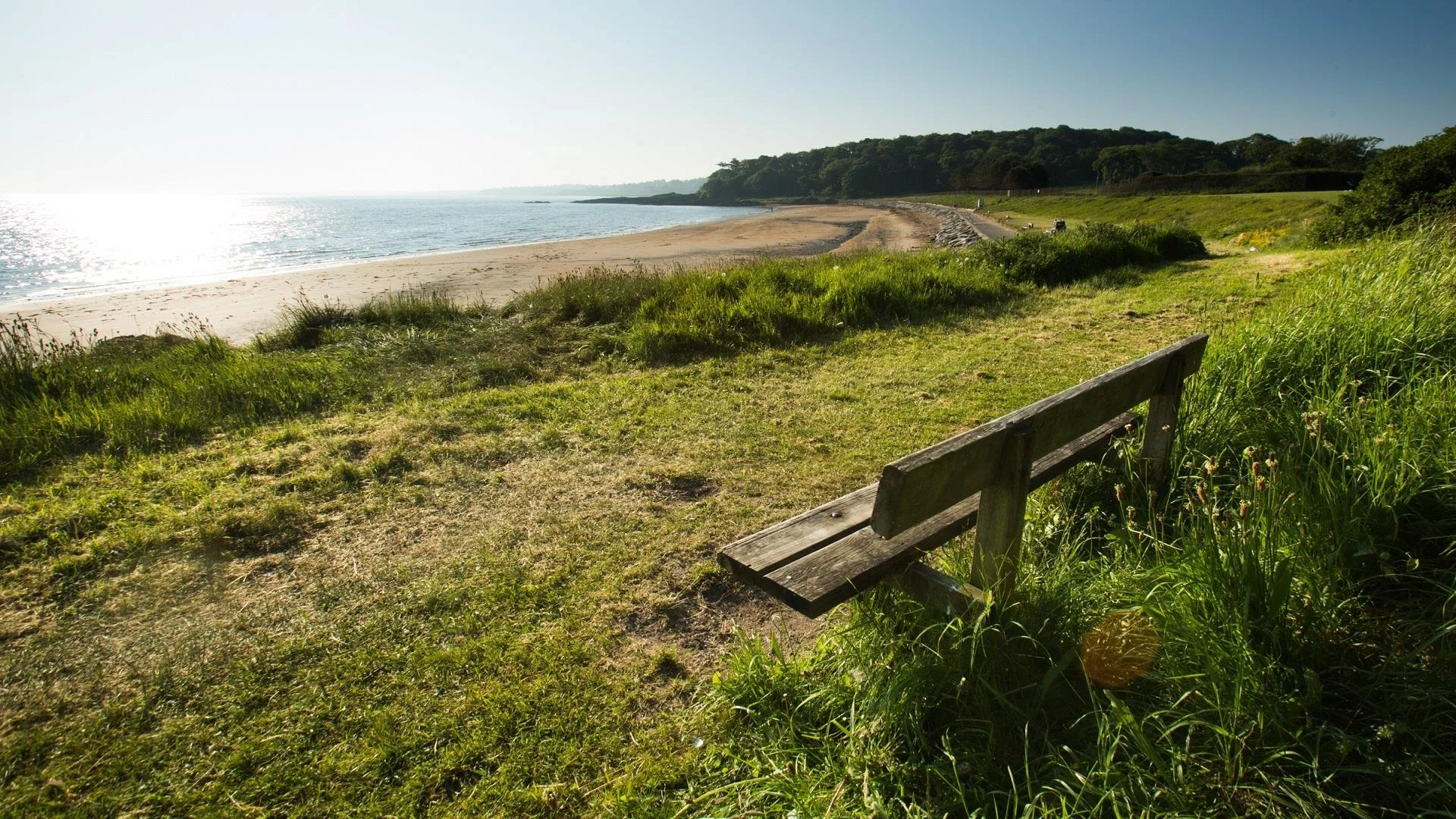
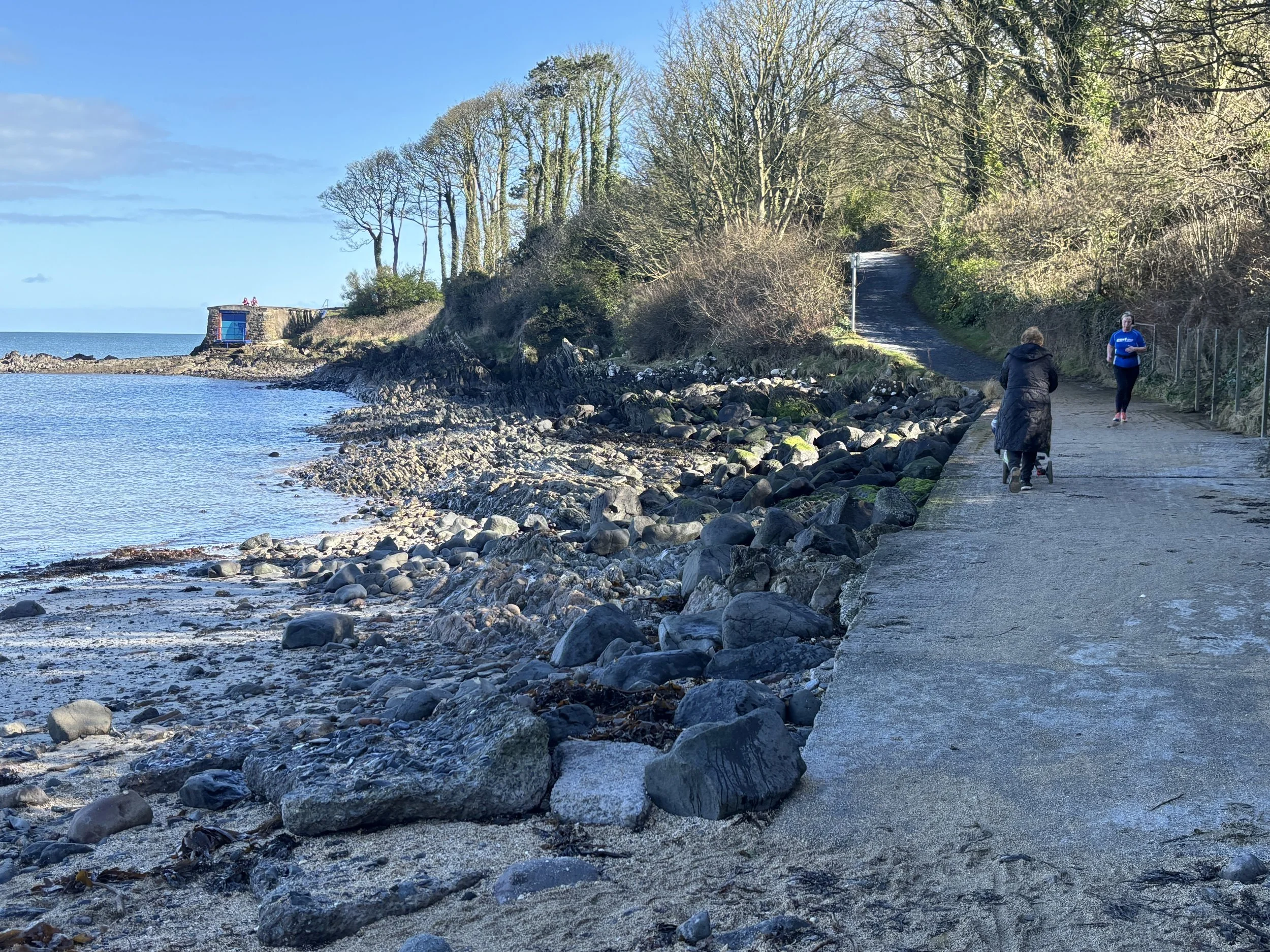
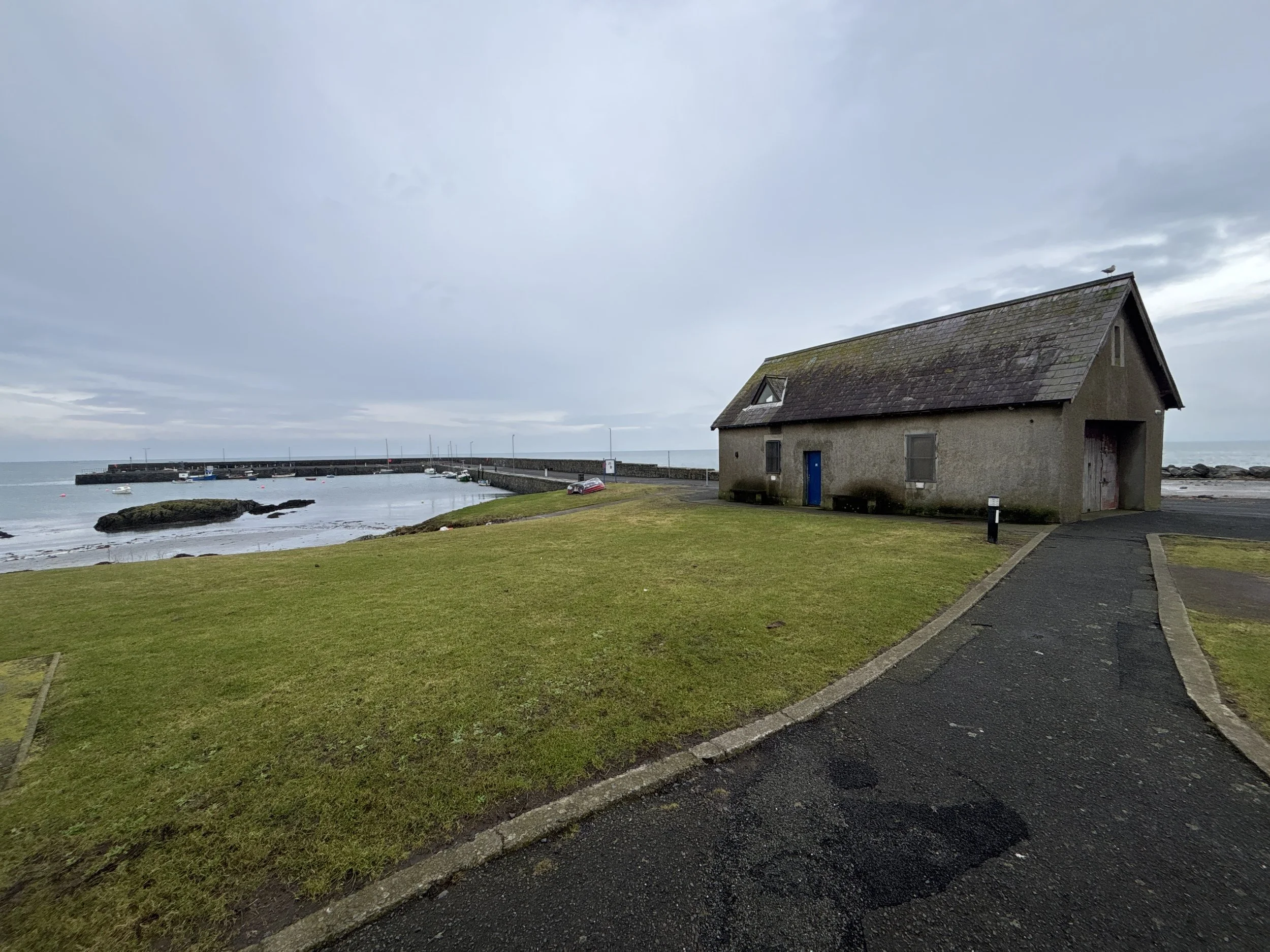
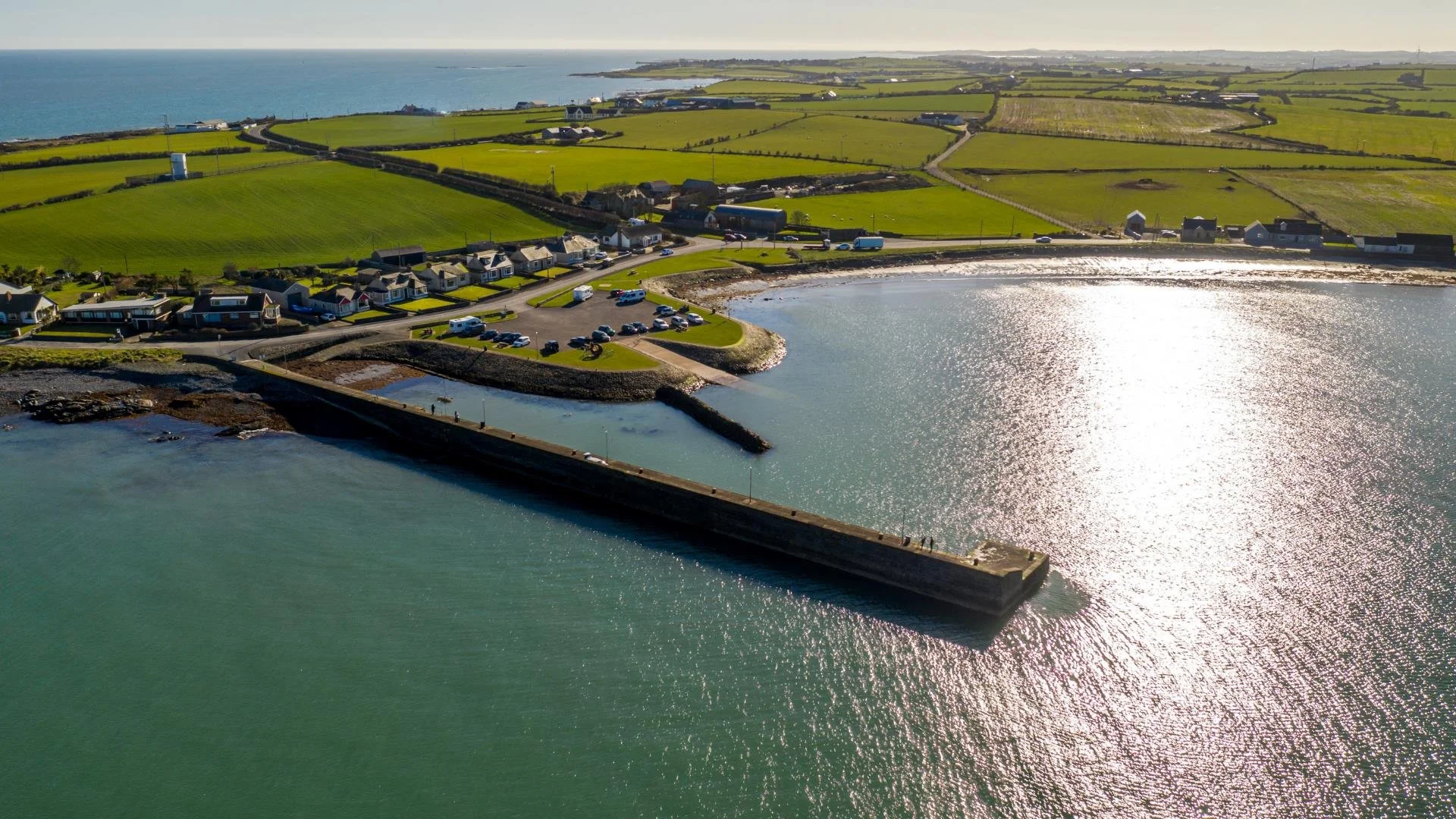
The Ards Peninsula is rich in places worth discovering: working fishing harbours, quiet beaches, remarkable dune landscapes and villages with their own distinct identities. Yet the experience of travelling around the peninsula is uneven. Some locations have the landscape and local activity to attract people, but lack the facilities or commercial offer that would encourage them to stop, stay and return.
Working with Ards and North Down Borough Council, OGU and MMAS undertook a wide-ranging study of coastal opportunities across the borough, with a particular focus on Council-owned land. The first stage looked well beyond the three eventual case studies. We visited and mapped locations around the peninsula, investigated ownership, existing infrastructure and commercial potential, and spoke with Council teams, local stakeholders, clubs and community organisations. This work built a longlist of possible sites and identified where targeted intervention could be realistic and useful.
From this research, Burr Point, Portavogie and Cloughey were selected for detailed feasibility studies. For each, we explored two connected futures: lower-cost, temporary uses that could be tested quickly, and longer-term buildings and public realm improvements that could follow if demand was demonstrated. The result is both a set of site-specific proposals and a way of thinking about coastal regeneration at the scale of the whole peninsula.
The wider research
The study considers coastal recreation and blueways, food and hospitality, making and cultural activity, existing village assets, land ownership, servicing and the relationship between visitor spending and local life. The aim was not to place the same intervention everywhere, but to find what each location could support and how those opportunities might reinforce one another.
Burr Point
Ballyhalbert · A new reason to visit Ireland’s easternmost point.
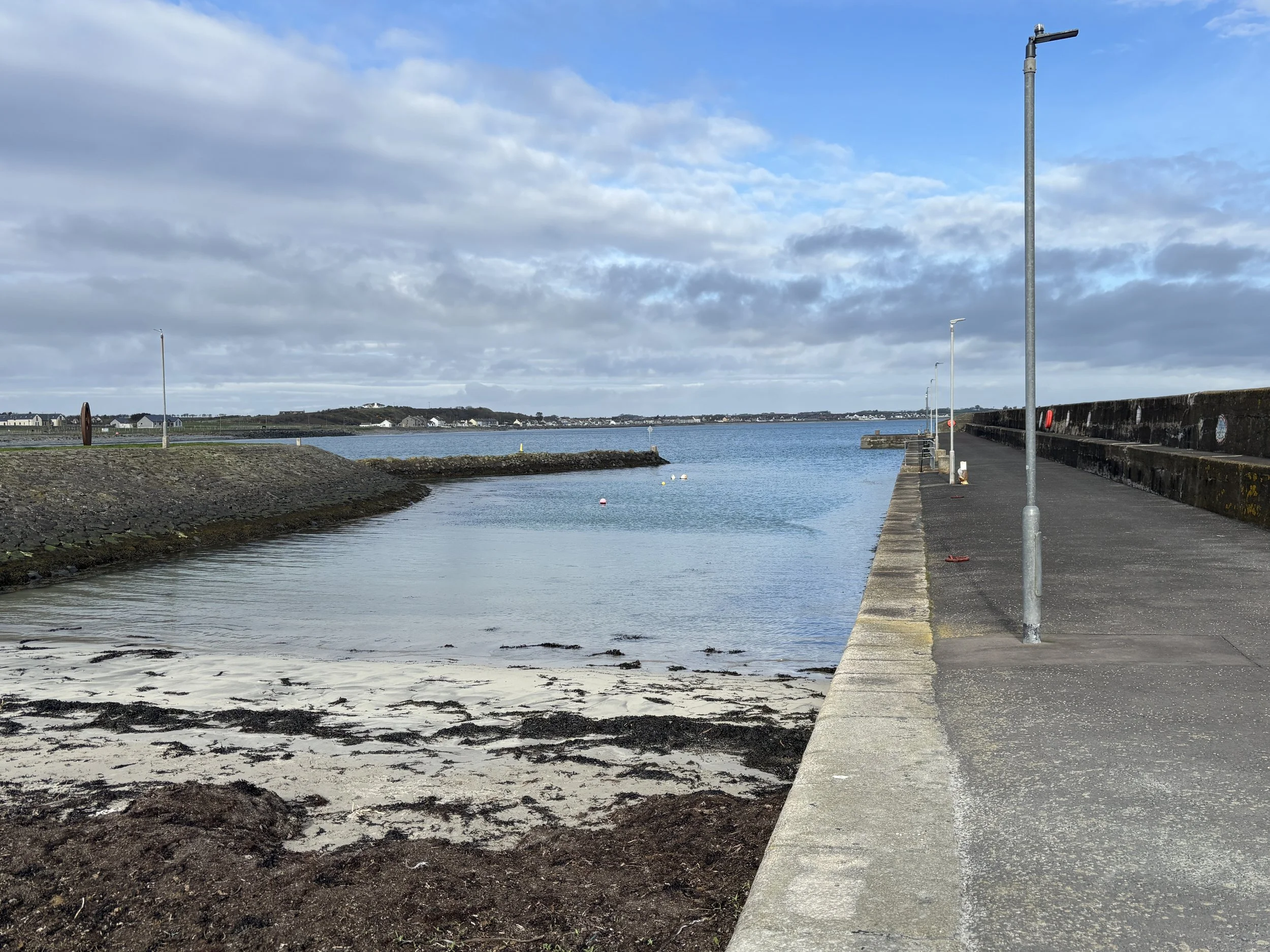
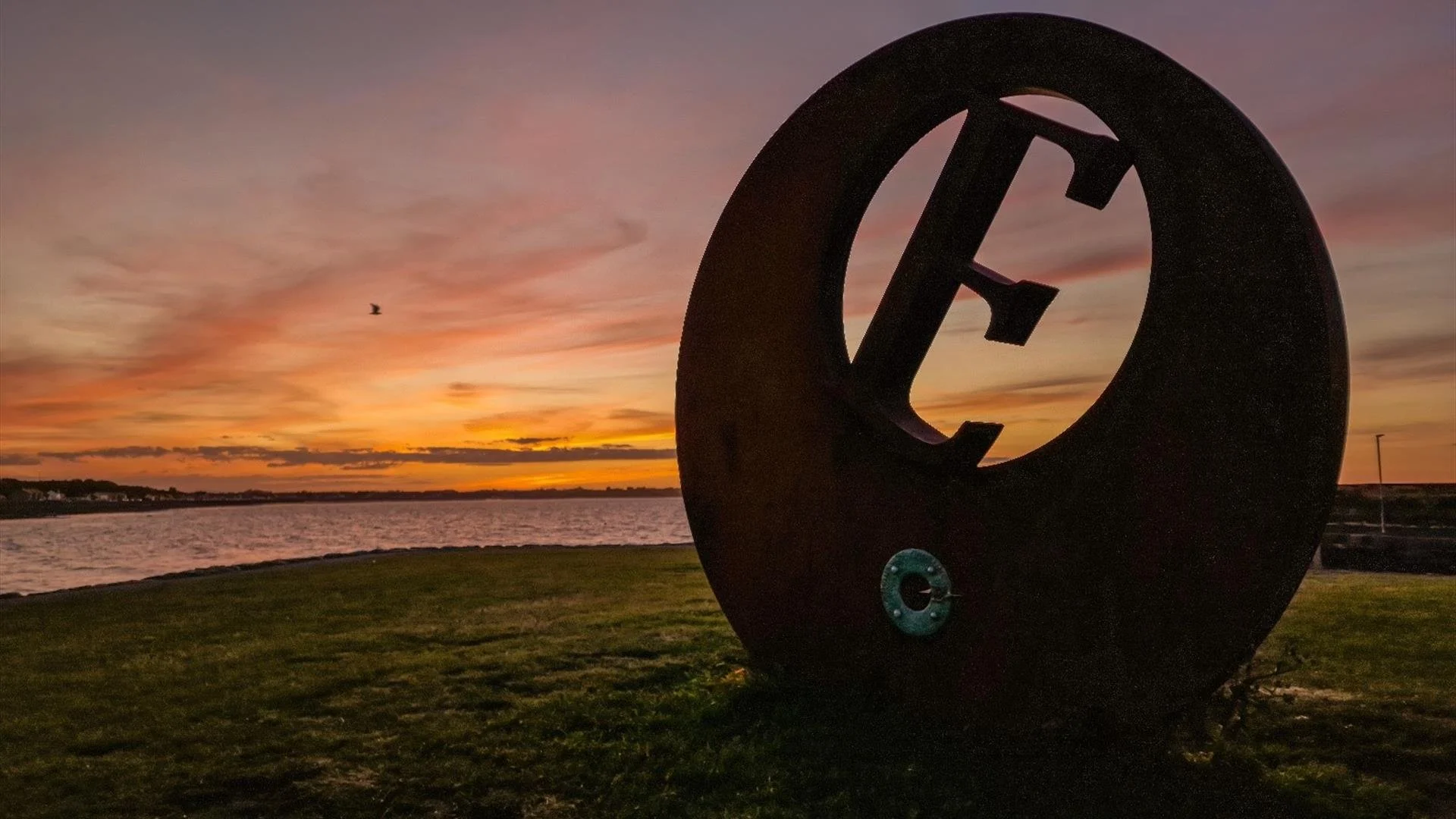
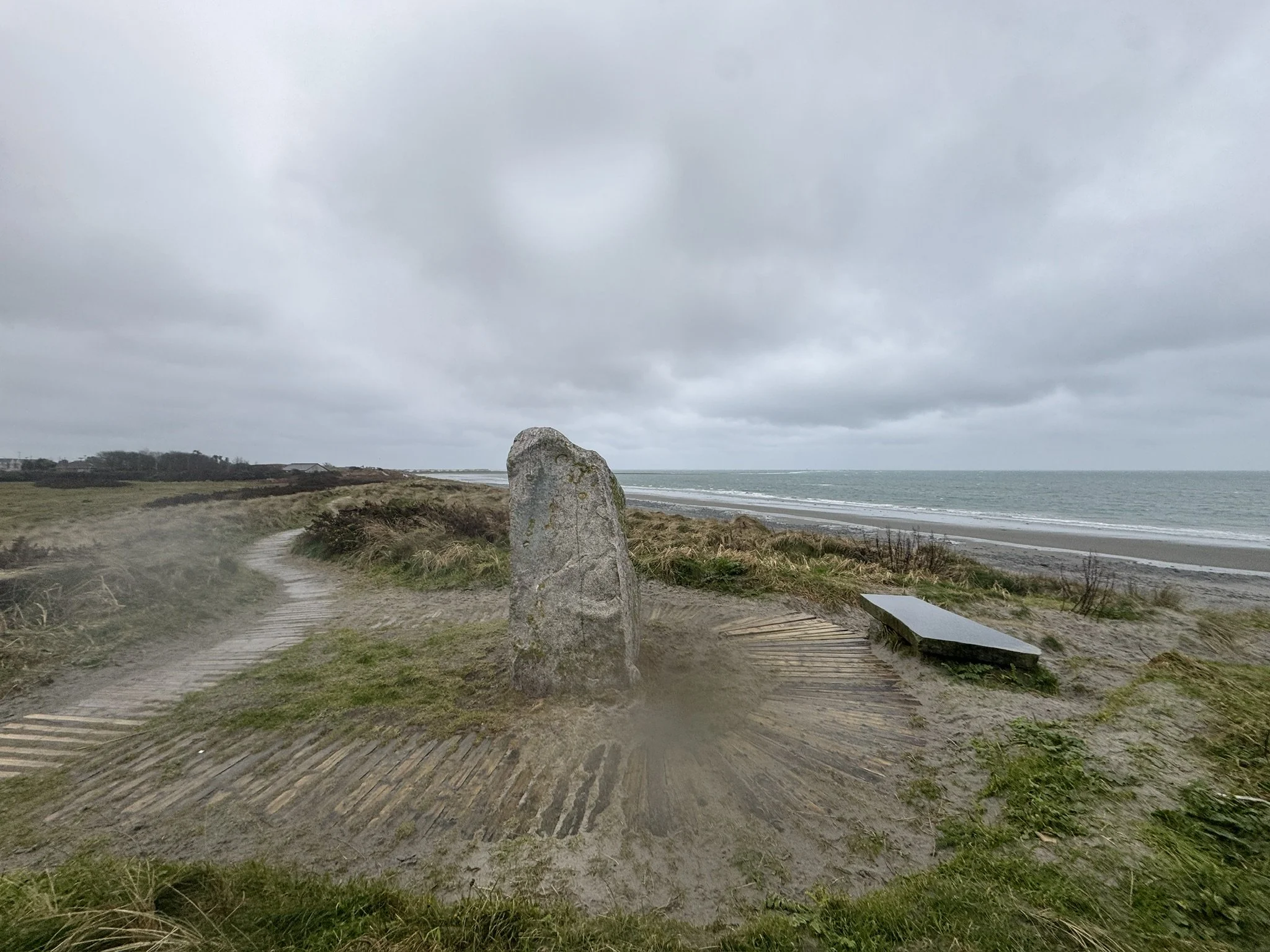
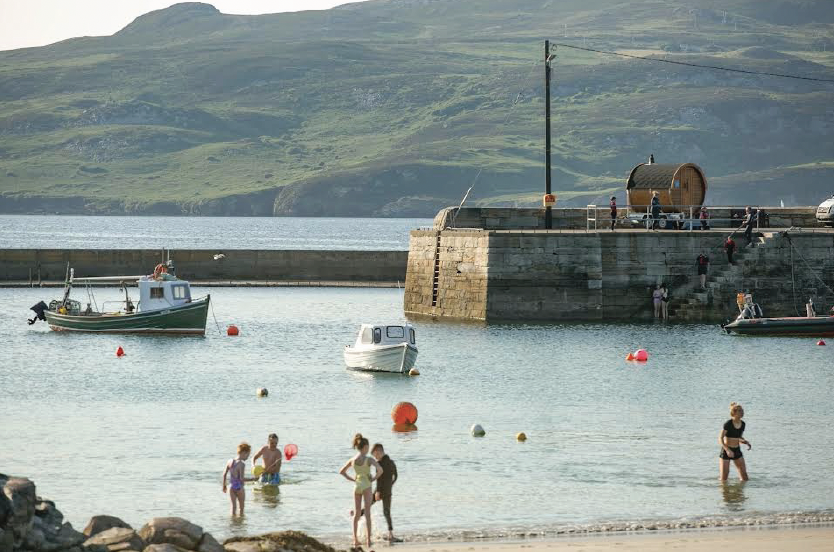
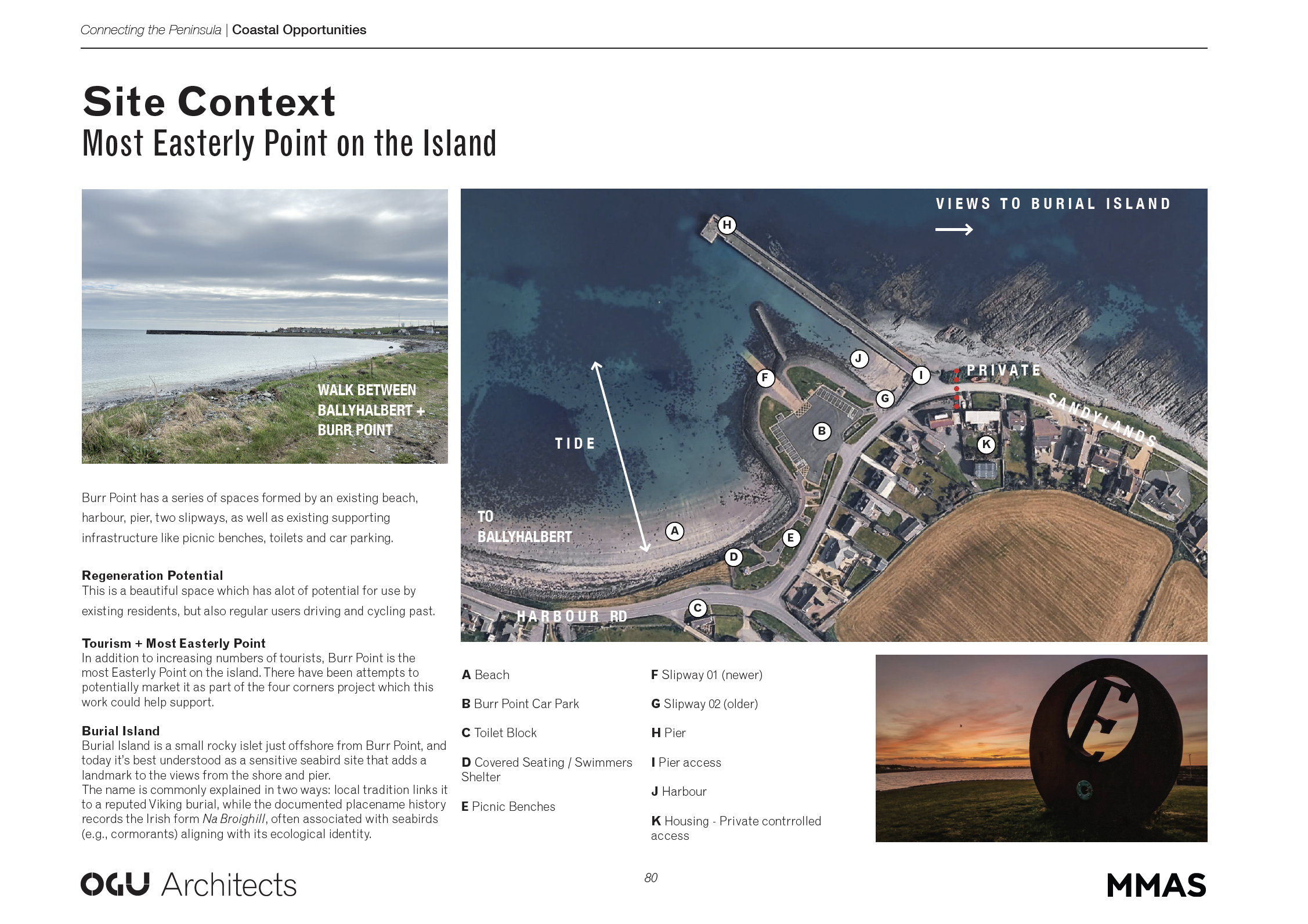
Burr Point already has a compelling identity: a dramatic position on the coastline, views towards Burial Island and a marker celebrating the easternmost point on the island of Ireland. The opportunity is to turn a memorable viewpoint into a place where people can comfortably spend time, without losing the openness of the setting.
SHORT TERM — The study identifies a modest pilot offer using the existing food and beverage pitch, with potential for a quality coffee or food operator, sauna and wellbeing activity, and storage supporting watersports. Temporary structures and carefully selected operators would test whether the location could attract repeat visits and support a sustainable offer.
LONG TERM — If those uses prove successful, a small permanent building could bring together a coffee hatch, viewing terrace, watersports hire, visitor information and a community meeting point. Better connections between Ballyhalbert and Burr Point would make the destination part of village life, rather than an isolated stop.
Portavogie
Working fishing village · Dunes, seafood and local enterprise.
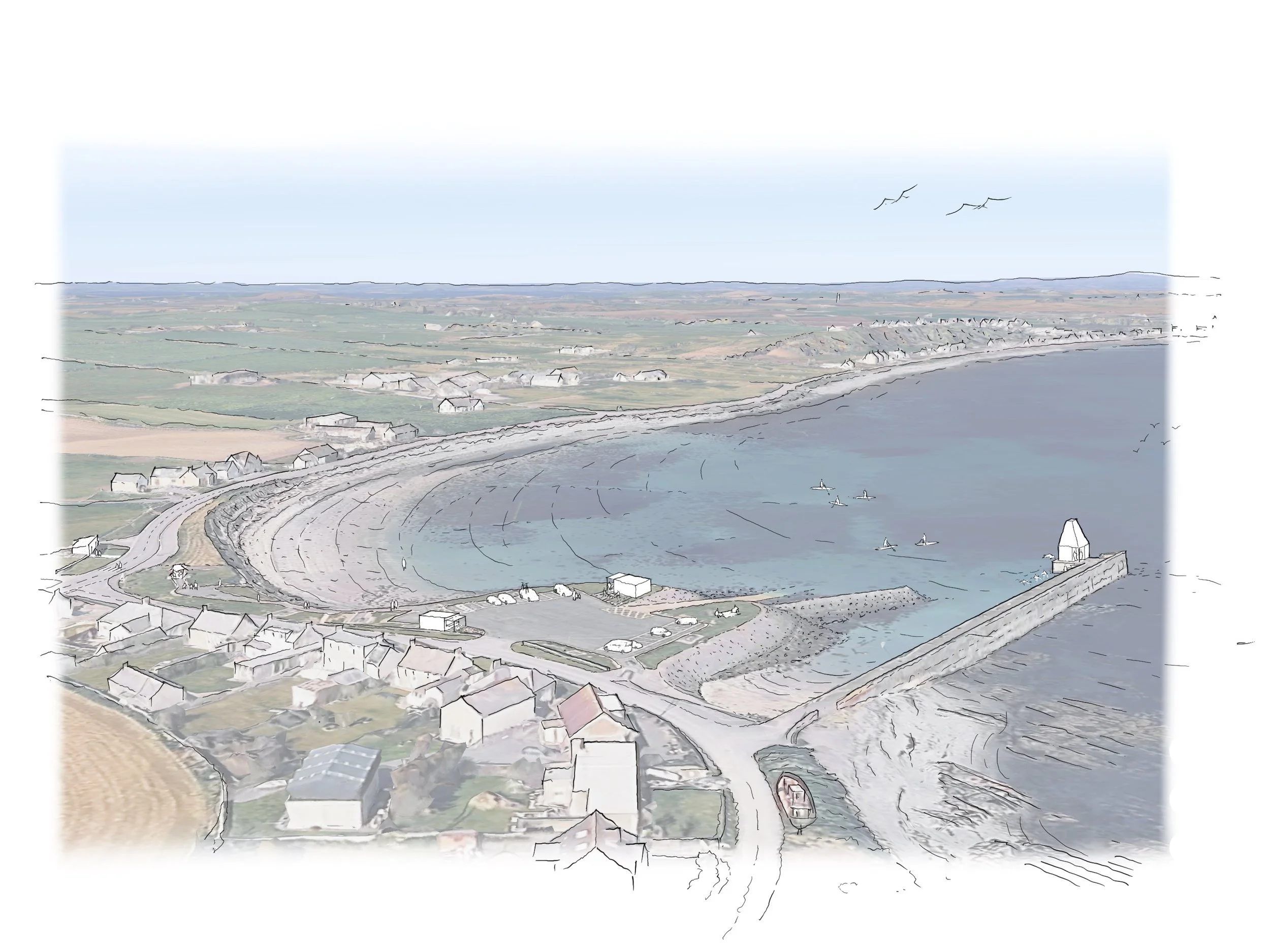
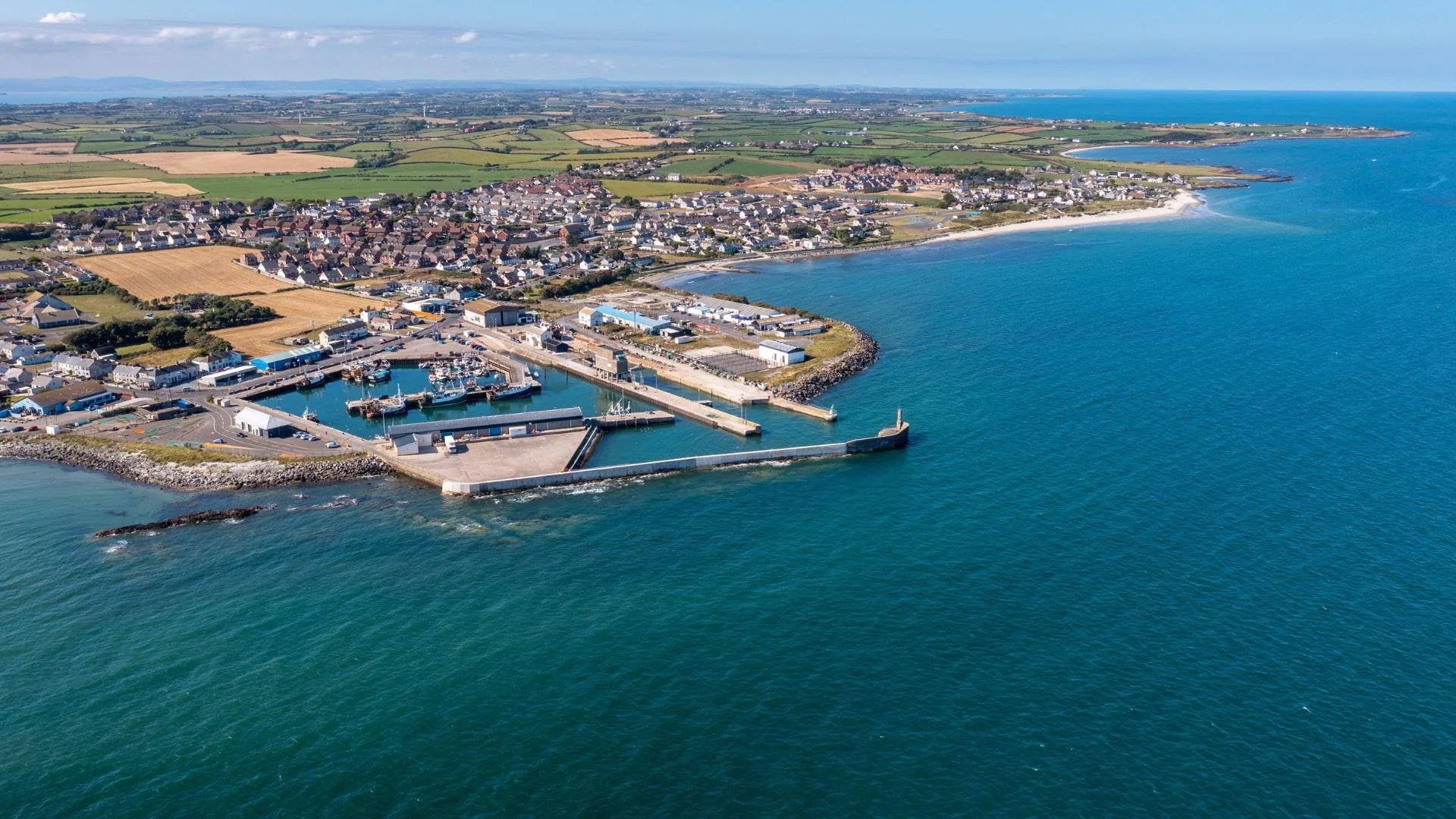
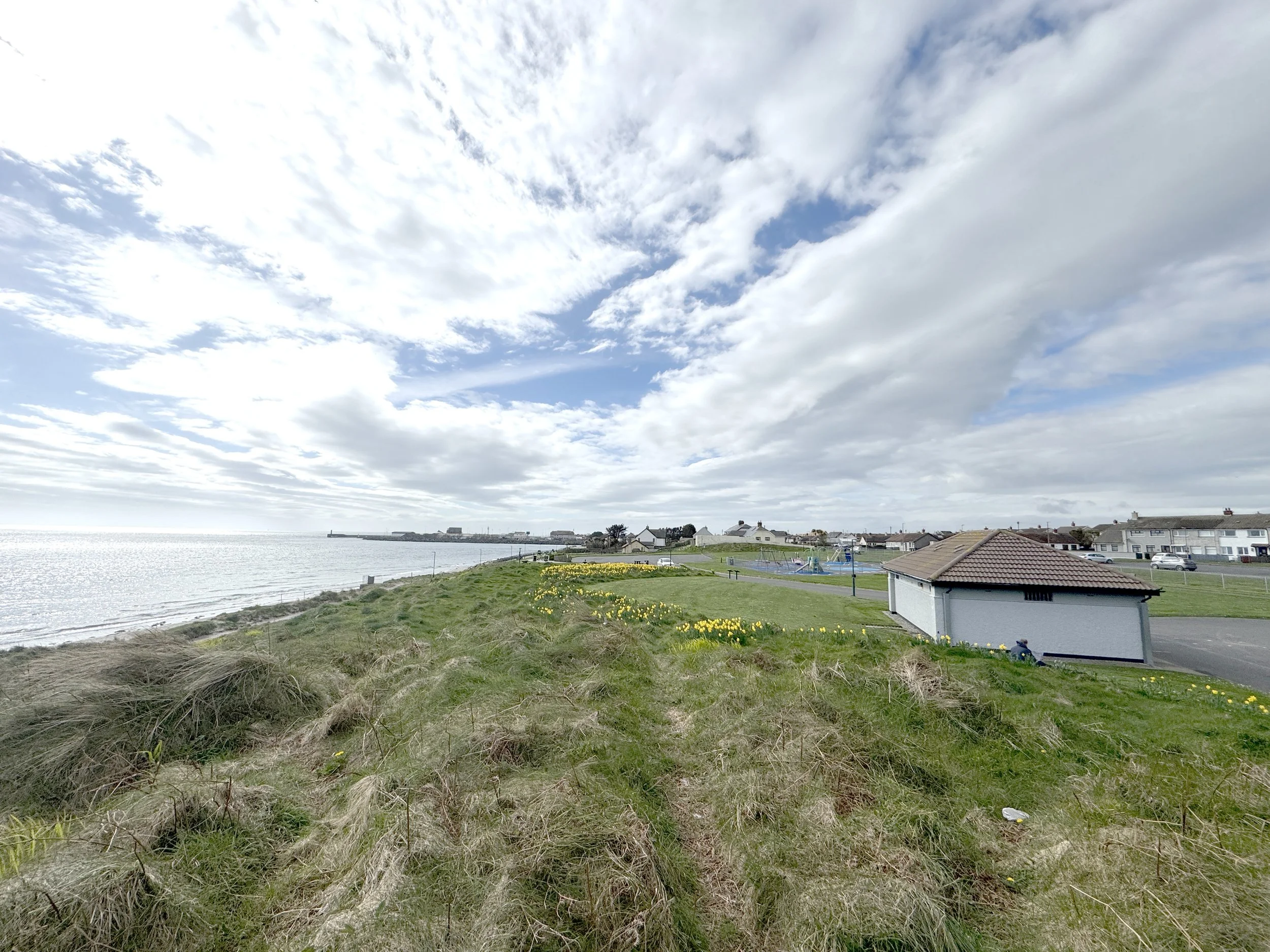
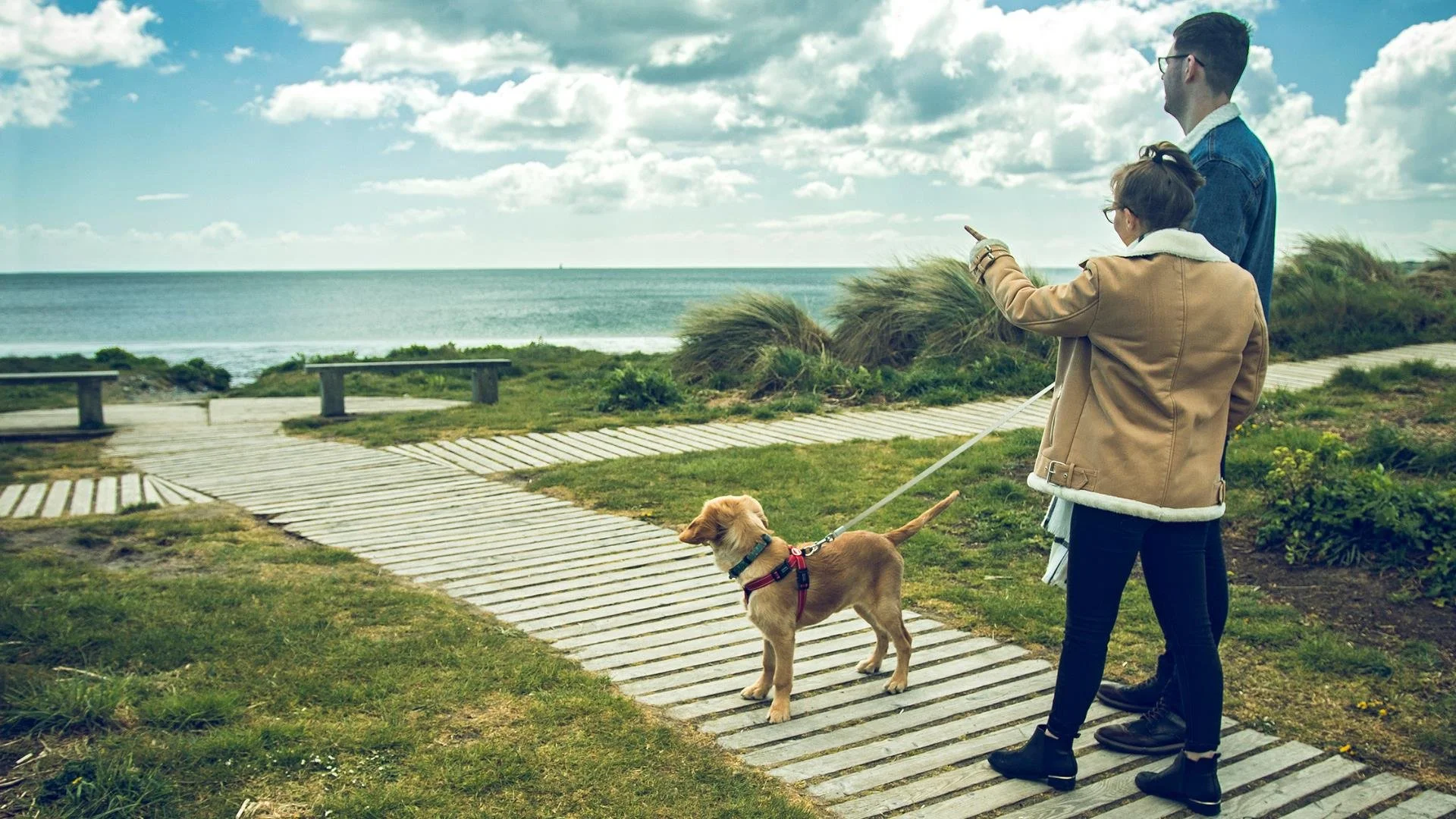
Portavogie’s working harbour and fishing culture give the village a strong identity, but the study found another remarkable asset at its northern edge: a dune landscape and coastal walkway beside an existing play area, toilets and rowing club facilities. Council teams identified the site as having unrealised regeneration potential. Improving it could draw people into Portavogie and support the wider village economy.
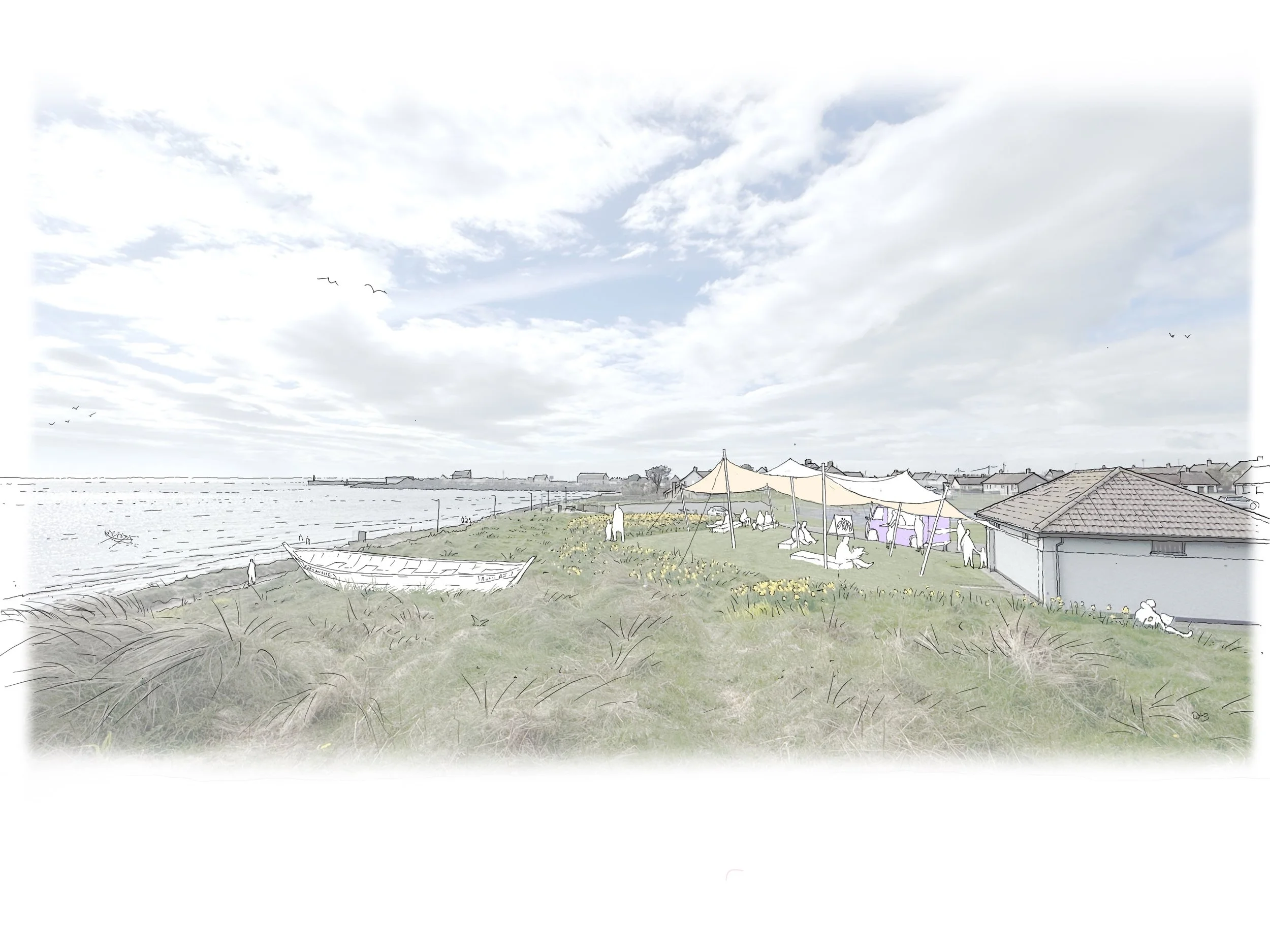
SHORT TERM — Proposals include a temporary food offer celebrating local seafood and produce, outdoor seating, a possible sauna and wellbeing use, storage for watersports, and potential small artist studios or creative activity in the dunes. These are opportunities to test, not confirmed tenants or uses. The aim is to establish a reason to stop while respecting the ecology and existing users of the site.
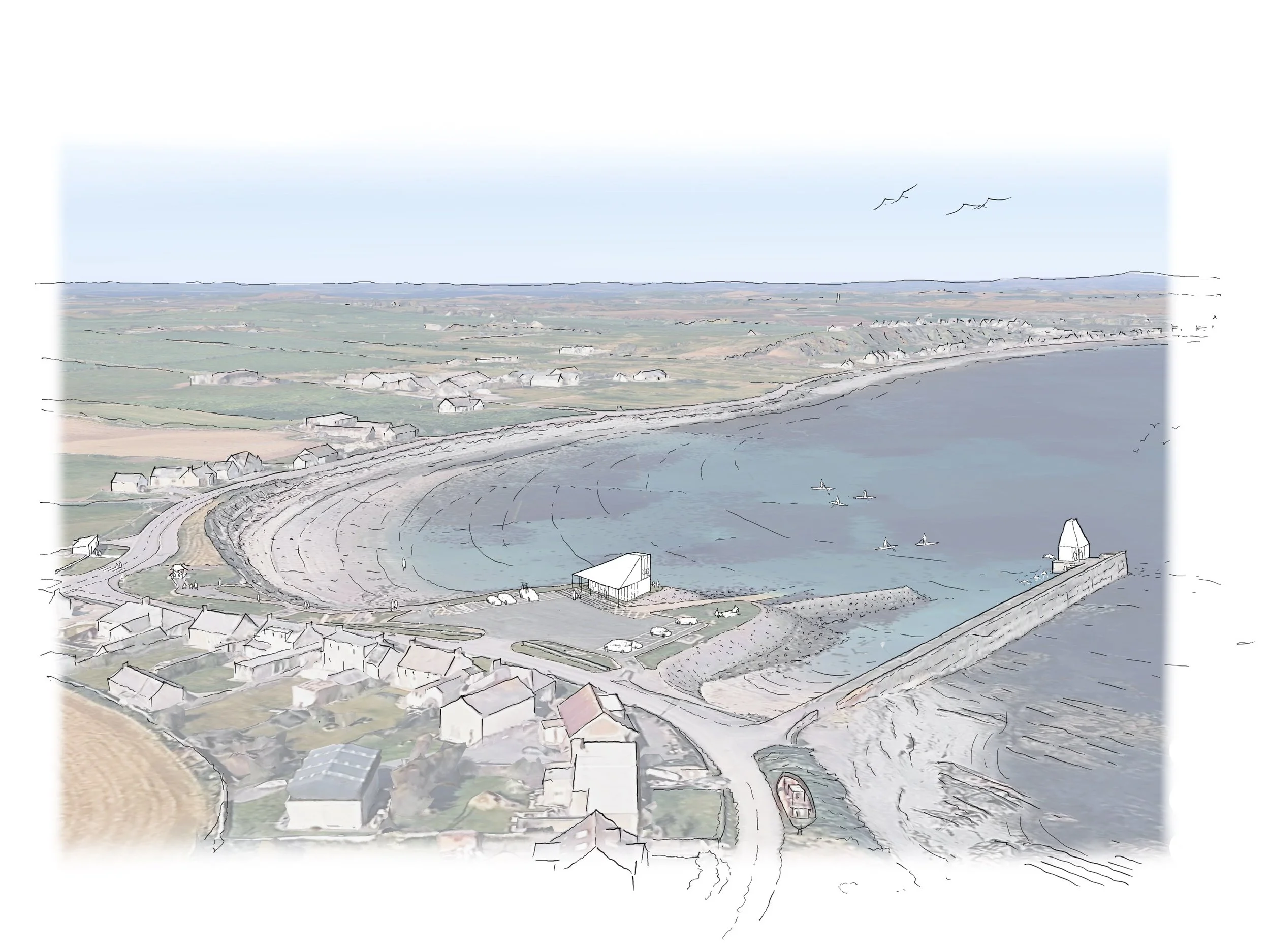
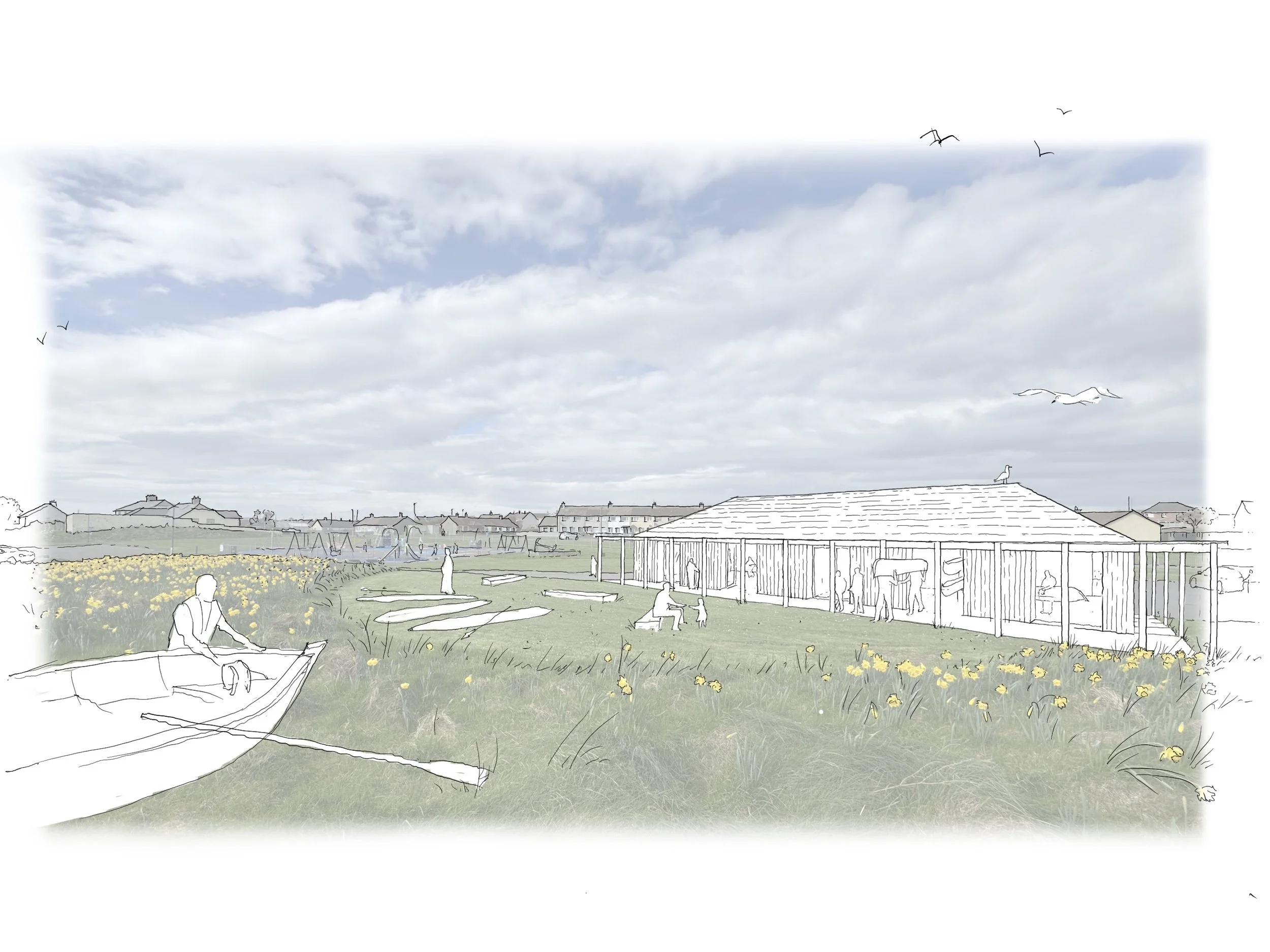
LONG TERM — A permanent visitor building could combine a café and terrace overlooking the water with storage for rowing, small boats and paddleboards. Better public realm and connections towards the harbour and village could extend the benefits beyond the immediate site, while keeping the working fishing industry central to Portavogie’s character.
Cloughey
Beach and village · A better experience of the coast
Cloughey has an exceptional long sandy beach and an established network of coastal amenities, from parking and public toilets to recreation and walking. Its opportunity is not a large new attraction, but a better-quality stopping point that helps visitors enjoy the beachfront and spend more time in the village, while protecting the open dune landscape.
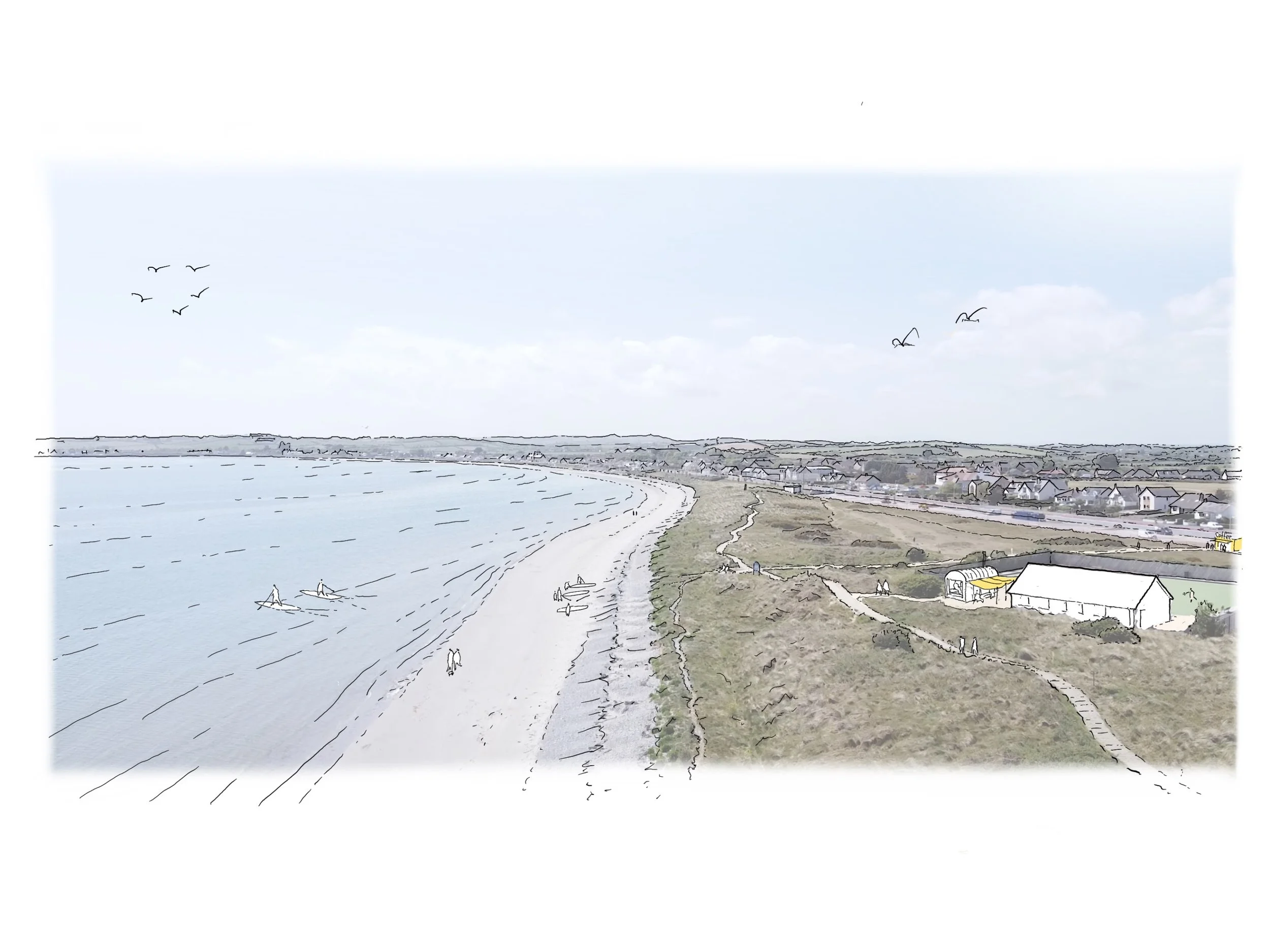
SHORT TERM — The study locates a potential food kiosk close to the existing beachfront car park and Council building, where access and services may be easier to provide. A small sauna or wellbeing offer with changing and watersports storage could be tested alongside the existing facilities, with new activity concentrated away from the most sensitive dune areas.
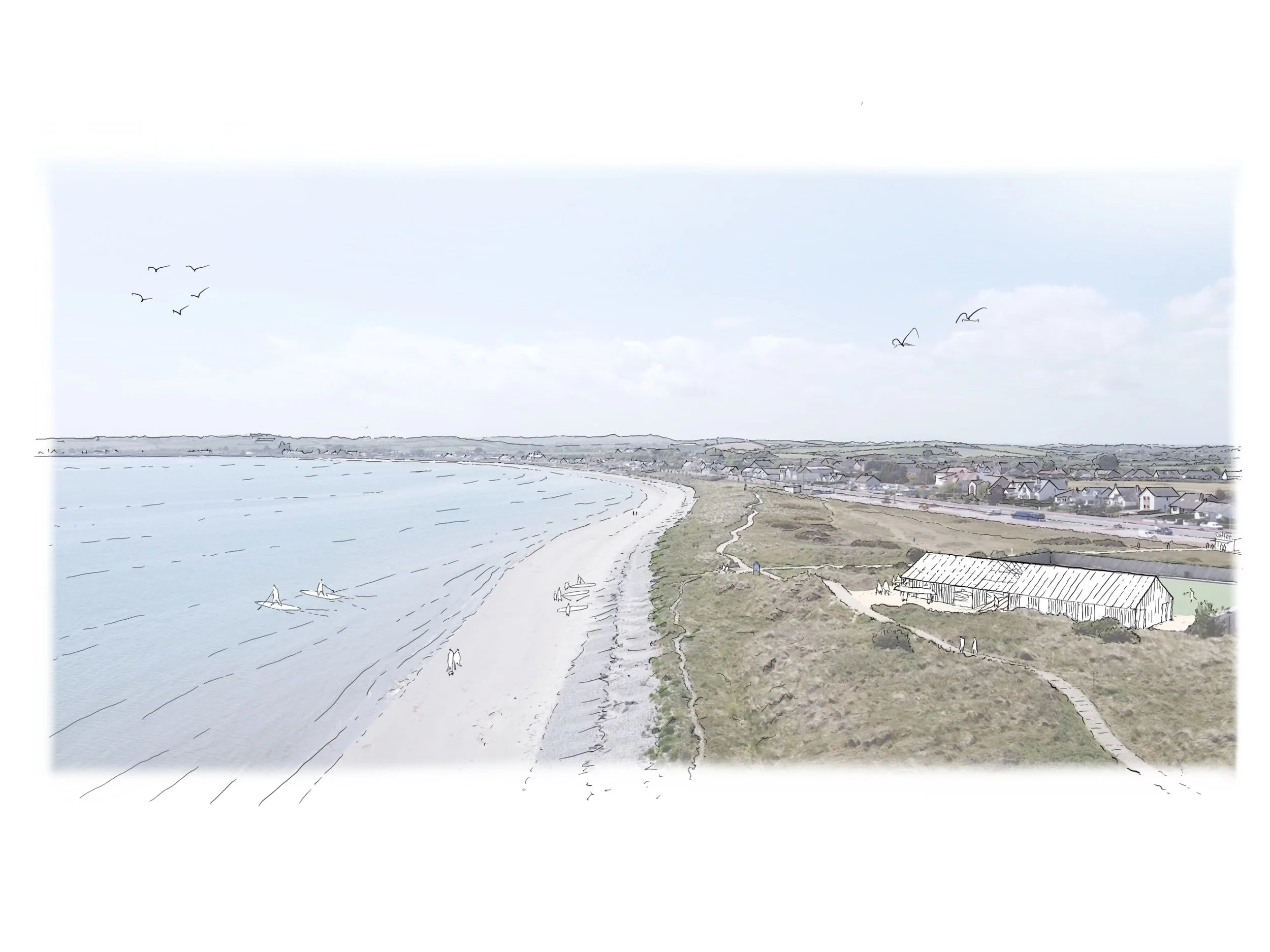
LONG TERM — The existing Council-owned building could be refurbished or extended to face the beach more positively, providing a café or other public-facing facilities with views across the dunes and sea. Improved changing and showers, seating and connections to village amenities could support use beyond the summer season.
Impact
Towards a borough-wide coastal strategy.
The three case studies are deliberately different. Burr Point is about the experience of a remarkable coastal location; Portavogie builds on a working maritime village and its overlooked dune landscape; Cloughey strengthens an existing beach destination. Together, they demonstrate how investment can respond to local character rather than reproduce the same visitor offer at every stop.
The broader research is equally important. Mapping opportunities, testing land ownership, identifying infrastructure and speaking with stakeholders created a stronger evidence base for decisions across the peninsula. The study proposes a connected ribbon of high-quality coastal experiences, supporting village regeneration, local enterprise and longer visits around the coastal loop. It is intended to complement the Council’s existing village plans and regeneration initiatives, not replace them.
Rather than beginning with large capital projects, the approach makes room for small, carefully curated trials that can show what works. Successful uses could then develop into viable businesses and more permanent architecture, giving the Council a practical route from feasibility to delivery.
Process
Research, trials and long-term investment.
The work moved through three scales: a peninsula-wide investigation; a shortlist of sites based on ownership, feasibility and potential; and detailed short- and long-term proposals for three priority locations. Alongside site design, the study considered operators, servicing, permissions, access, maintenance and the evidence needed to support future investment.
The report recommends a programme of live trials over a series of summer weekends at Burr Point, Portavogie and Cloughey. A curated mix of food, sauna and wellbeing, watersports, creative activity and small events could be adapted to the character of each site. These are proposed next steps, not events reported as having already taken place.
The trials would be measured as real-world tests: footfall, length of stay, trading, feedback, local support and the practicalities of running each site. That evidence could inform a subsequent Expression of Interest process for private operators, social enterprises or other partners. The Council’s early role would be to unlock and demonstrate opportunities, rather than necessarily operate them in the long term.